







Foyer chandelier guide
Your Foyer Tells
Your Story
Before You Do
The wrong chandelier can make even a beautiful entryway feel off — too small, and the space feels unfinished; too large, and guests feel overwhelmed. This guide gives you the exact sizing formulas professional designers use, for any ceiling height from 8 to 25 feet.
"The foyer chandelier is the first impression of your home — and the one fixture guests remember long after they've left."Vakkerlight Design Team
Top Picks — High Ceiling Chandeliers


See Your Chandelier
Before It's Made
Before you commit to any custom or standard order — no deposit, no obligation — our design team produces a detailed 3D visualisation of your chandelier in your actual space. This is what you see in the video: the real workflow our team uses, for every project.
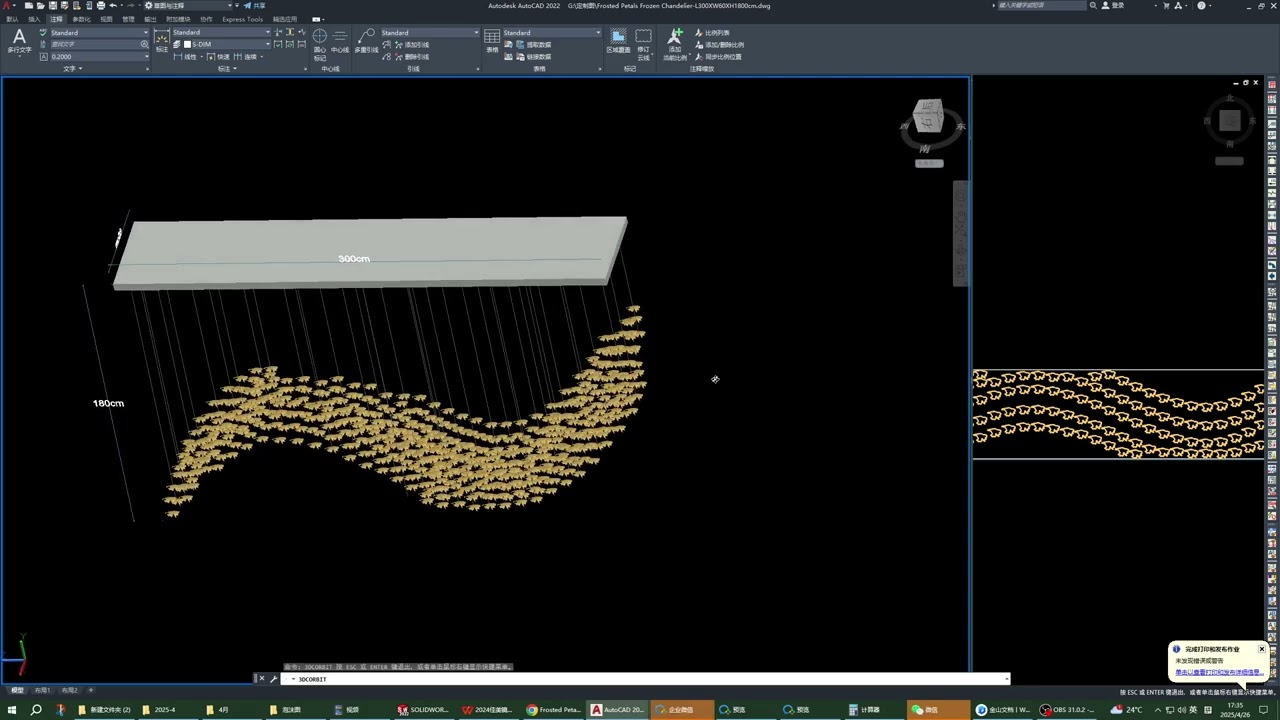
This video shows our actual 3D design workflow — the same process applied to every foyer chandelier enquiry, at no charge to you.
Why Your Foyer Chandelier Matters
Walk into a foyer with an undersized chandelier, and the space feels unfinished — like something is conspicuously missing. Walk in with an oversized fixture, and guests immediately feel overwhelmed. The foyer chandelier occupies a uniquely difficult position: it is the only light fixture in the home that must look intentional from the entry, the staircase mid-flight, and the second-floor landing simultaneously.
Done right, it anchors your home's design story. It tells guests what to expect before they take another step. This guide gives you the formulas, the ceiling-height reference tables, the style framework, and the five mistakes to avoid — so you choose with confidence.
The foyer is one of the rare spaces where going slightly larger than the formula suggests almost always produces a better result. The vertical height of an entryway makes fixtures appear smaller than they are in showrooms. A chandelier that looks bold in person may feel modest once installed at 16 feet.
Getting the Size Right
Interior designers rely on two formulas: one for diameter, one for fixture height. These are starting points, not laws — but they keep the vast majority of homeowners out of trouble.
For two-story foyers or ceilings above 14 ft: add 20–30% to the result.
Chandelier height = the fixture body only, not the chain or rod.
The golden rule that overrides all formulas: the bottom of your chandelier must clear at least 7 feet from the floor. In two-story foyers, position the bottom at approximately second-floor eye level — typically 8 to 10 feet from the ground floor.
If your foyer opens into adjacent rooms or has very high ceilings (12+ ft), increase diameter by 10–20%. For narrow, enclosed entryways, reduce by 10–15% to avoid a crowded feeling.
Size by Ceiling Height
Every foyer is different. Select your ceiling configuration below for specific proportions, placement rules, and product recommendations.
- Diameter: 16–22 inches (sum of room dimensions)
- Fixture height: Under 20 inches — keep it compact
- Clearance: Minimum 7 ft from floor to lowest point
- Semi-flush or flush mount preferred at 8 ft ceilings
- Avoid multi-tier designs — they will overwhelm the space
Drum shades, single-tier rings, alabaster flush mounts, simple globe pendants. Anything with vertical cascading elements will feel cramped. Prioritize horizontal visual weight over height.
- Diameter: Formula result — no adjustment needed
- Fixture height: 25–36 inches
- Clearance: 7 ft 6 in from floor to lowest point
- Multi-tier designs begin to work at 12 ft
- Consider a statement piece — this height rewards it
Multi-tier crystal, sculptural pendants, organic alabaster, glass drop chandeliers. The 10–12 ft foyer is the most forgiving — trust the formula and choose a style you love, not just the safest option.
- Diameter: Formula result + 20–30%
- Fixture height: 36–48 inches
- Position: Bottom at 8–9 ft from ground floor
- Seen from staircase mid-flight — choose an interesting top/canopy
- Light output becomes critical — aim for 2,000+ lumens
In two-story foyers, the chandelier is observed from at least three angles: the entry, the staircase, and the second-floor landing. Choose a fixture that is visually compelling from every perspective — not just looking up from the ground floor.
- Diameter: 36–60+ inches — scale generously
- Fixture height: 48–72 inches or more
- Position: Bottom at 9–10 ft from ground floor
- Cascading, multi-tier, or elongated silhouettes thrive here
- Layer with recessed or sconce lighting for adequate fill
At 20+ ft, a single fixture risks looking lost. Use a chandelier as the centerpiece, then add wall sconces at second-floor level to create a sense of layered, deliberate lighting design rather than one fixture floating in darkness.
Lighting the Staircase Hall
Two-story foyers and staircase landings share the same grand proportions. Our Staircase Collection is curated for high-ceiling entryways — designed to look intentional from every floor, every angle.
Shop Staircase Lighting5 Common Foyer
Chandelier Mistakes
Even well-intentioned buyers make these errors. Knowing them before you shop is the difference between a confident purchase and an expensive return.
Matching Style to Your Interior
Size and proportion are science. Style is instinct — guided by your home's existing aesthetic. A chandelier that works in isolation can feel dissonant if it contradicts the language of the rooms beyond the entry.
A useful shortcut: look at your staircase railing and door hardware. The finish and weight of those elements are the single strongest signal for what chandelier language belongs in your foyer.
- Standard ceiling 8–12 ft
- One fixture typically sufficient
- Flush mounts viable for 8 ft ceilings
- Position at least 7 ft from floor
- Pair with console lamp for layers
- Ceiling 14–22+ ft
- Fixture seen from ground and stairs
- Diameter: formula result + 20–30%
- Position at second-floor eye level
- Choose multi-tier or elongated silhouette
Hanging Height & Illumination
The chandelier's hanging position affects both aesthetics and function. In a two-story foyer, the conventional rule is to hang the bottom at approximately the level of the second-floor railing — typically 8–10 feet from the ground floor — so it reads as a cohesive visual element from both levels.
| Foyer Type | Clearance Rule | Ideal Bottom Height |
|---|---|---|
| Standard (8 ft ceiling) | Minimum 7 ft clearance | 7 ft from floor |
| Single-story (9–12 ft) | 7 ft 6 in clearance | 7.5 ft from floor |
| Two-story (14–18 ft) | Eye level, 2nd floor | 8 – 9 ft from floor |
| Grand foyer (18–22+ ft) | Architectural center | 9 – 10 ft from floor |
| Console table below fixture | Intimate scale allowed | 6.5 – 7 ft from floor |
Light output: For a well-lit foyer, target approximately 2,000–4,000 lumens (LED equivalent). If your chandelier prioritises aesthetics over raw output, layer with recessed downlights or wall sconces. Use a warm color temperature of 2700–3000K for a welcoming golden glow.
In foyers with floor-to-ceiling windows, position your chandelier at the vertical center of the window opening. From outside, this creates a welcoming glow at approach — and from inside, it frames the chandelier as a deliberate architectural element rather than a floating afterthought.
Explore the High Ceiling Collection
Designed for multi-level viewing angles. Scaled and styled to fill vertical space with elegance — whether your staircase is a grand sweep or a compact landing.
View All High Ceiling ChandeliersFrequently Asked Questions
Ready to find your
perfect chandelier?
Explore our curated High Ceiling Chandelier collection — scaled for grand entrances, double-height foyers, and dramatic ceilings up to 25 ft.


